Licensed officers across California — transparent instant pricing, booked online in about 60 seconds. No contracts, no callbacks.
Licensed & Trained Hire Event Security Guards Officers · Serving All of California
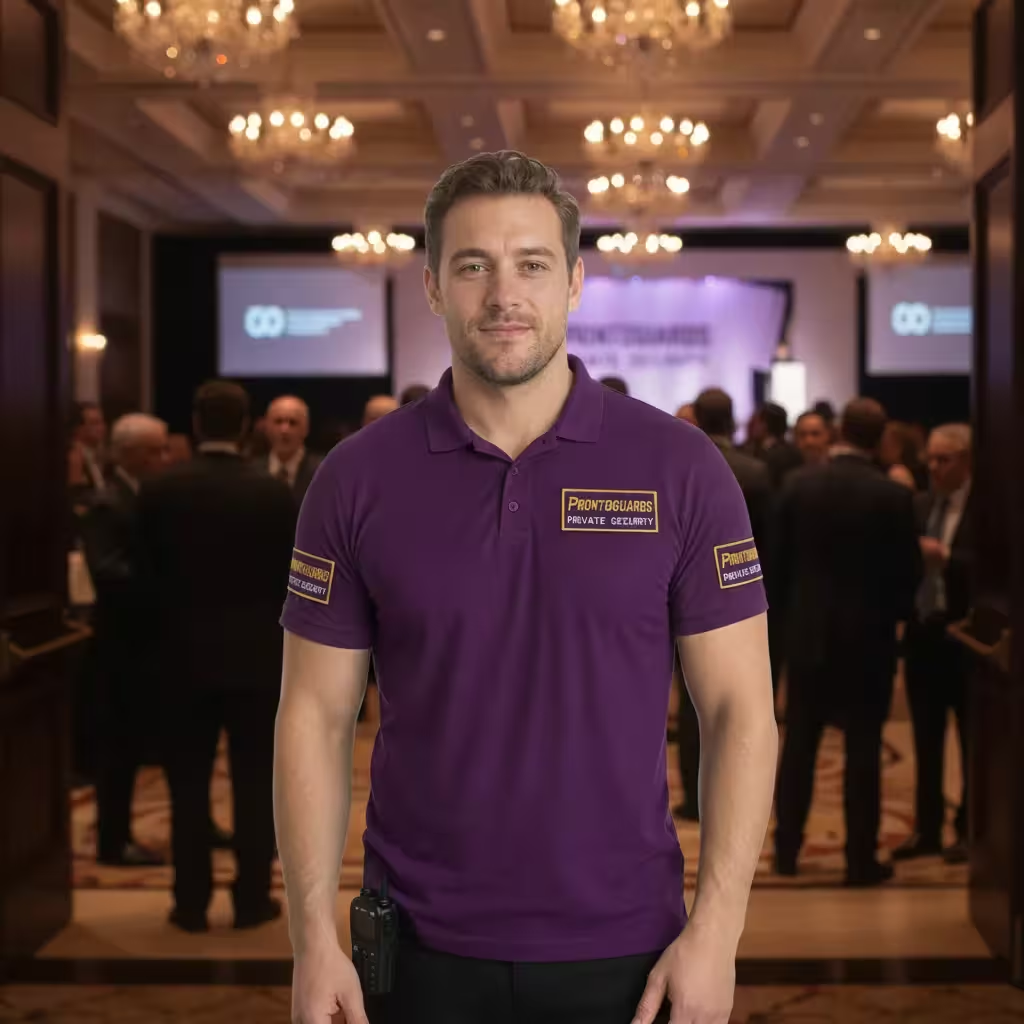
Pronto Guards provides licensed event security guards for hire across California — weddings, concerts and festivals, corporate functions, private parties, and community events — with entrance, perimeter, parking, and roving posts scoped from your site plan. Every officer holds a current BSIS Guard Card, the company holds PPO 122150 and $1,000,000 in liability coverage, and you hire online in about 60 seconds with the exact price shown upfront — no quote to wait on, no sales call.
New to booking security online? See exactly how Book-a-Guard works — price and confirm licensed officers in about 60 seconds.
Event security in California costs $40–$120 per officer per hour with a four-hour minimum. Most events use unarmed officers at $40–$60/hr. A 300-guest corporate gala with a bar typically runs six officers for eight hours — about $2,500; a 1,000-attendee festival runs 10–13 officers plus dedicated entry and barricade posts. Pronto Guards scopes the count from your attendance, venue, bar, and entrances, and shows the exact total before you book.
Event security is the discipline of keeping a gathering safe and controlled without changing its character — whether that gathering is a 150-guest wedding, a 5,000-person festival, or a corporate conference. The work is mostly preventive and mostly invisible: managing who comes in, maintaining a visible deterrent presence, watching the points where problems start, and de-escalating the small things before they become big ones. Done well, the guests barely notice it; done poorly, its absence is the thing everyone remembers.
The core functions are consistent across event types. Access and guest-list control at the entrance determines who gets in. Crowd management keeps people moving safely and prevents dangerous density at choke points. Asset protection covers the things that get targeted — gift tables, cash, equipment. Bar and behavior management handles the predictable friction of alcohol and crowds. And emergency readiness means officers know the exits and can direct an orderly response if something goes wrong. The mix and emphasis change with the event, but those functions are the spine of every job.
What separates competent event security from a person in a uniform is judgment under live conditions: knowing when to step in and when to hold position, how to turn away an uninvited guest without creating a scene, how to read a crowd's energy before it becomes a problem. That judgment is built from experience across many events, and it is the thing a brochure cannot fake and a checklist cannot teach.
Most security companies make you request a quote and wait for a sales call. We show our pricing. Event security is priced per officer, per hour, with a four-hour minimum per guard. The rate depends on the type of officer your event needs:
| Officer / coverage type | Rate (per hour) | Best for |
|---|---|---|
| Unarmed officer | $40–$60/hr | The standard for the large majority of events — weddings, parties, corporate functions, community events. Access control, deterrence, crowd flow. |
| Armed officer | $55–$90/hr | Events with cash handling, high-value property, or an assessed elevated risk. Carries the BSIS firearms permit. |
| Off-duty / experienced officer | $80–$120/hr | High-profile events and VIP coverage where law-enforcement-level training and presence add real value. |
Short-notice bookings (within 24 hours) carry a 10% surcharge, shown before you pay. You see your exact total online before you book — no quote to wait on, no callback, no runaround. That transparency is the whole point of how we work.
Sizing and positioning a security team is not guesswork — it follows from headcount, venue, and risk factors. Here is how an operations team actually scopes the event types we cover most:
The baseline is one officer per 50 guests for a general event — so 150 guests is about three officers, 250 is about five. This is the starting number, before adjusting. Concerts and festivals run leaner per head (one per 75–100) for general coverage but add specialized posts on top.
Alcohol service usually adds an officer — a bar changes crowd behavior and needs nearby coverage. Each additional entrance needs staffing. VIPs, cash handling, a large outdoor footprint, or a high-energy crowd each push the count up. Seated, single-entrance, no-alcohol events can run at or below the baseline. The goal is matching coverage to actual risk, not maximizing the headcount.
The count is half the job; positioning is the other half. We staff the entrance properly first (most problems are prevented at the door), then cover the bar, the gift or asset areas, the floor, and the perimeter and exits. Officers flex as the event moves — entrance coverage shifts to the floor once arrivals finish.
Good event security plans for the day going wrong, not just going right: officers know the exits, the egress routes stay clear, and the team can direct an orderly evacuation if needed. This planning happens before guests arrive and is the part that distinguishes professional coverage from a warm body at the door.
| Event | Officers | Where they stand |
|---|---|---|
| Up to 100 guests · private venue · one entrance · no bar | 2 (four-hour minimum each) | One on the entrance and guest list; one floating the room. |
| 100–250 guests · hall or ballroom · bar service | 3–5 | One per 50 guests as the baseline: entrance during arrivals, then bar and floor, exits at close. |
| 250–500 · corporate function or gala · registration, VIPs | 6–8 plus a lead | Registration and badge control, floor, VIP and restricted-area access, exits. The lead runs the radio and the venue relationship. |
| 500–1,000 · outdoor or ticketed · alcohol | 8–13 plus a lead | One per 75–100 for general coverage, plus dedicated entry screening, a barricade line, and a perimeter post. |
| 1,000–2,500 · festival or concert | 15–30, one supervisor per 8–10 officers | Entry lanes with bag checks, stage-front barricade, roving pairs, egress posts, a command point with the event manager. |
| 2,500+ | Scoped from the site plan | A written security plan the venue or city will ask for; typically 1:100 general coverage plus fixed posts and supervisors. |
One officer per 50 guests is where the count starts, not where it ends. The number moves on five things: whether alcohol is served, how many entrances the venue actually has (including the loading dock someone will prop open), whether there is cash or auction inventory on site, whether anyone attending needs personal protection, and how the crowd leaves. Egress is the part most quotes ignore: the last thirty minutes of a large event are the riskiest, and every officer has to still be on post when the doors open, not already on the way home because the booking ended at the last song.
If a company gives you a guard count without asking about the bar, the entrances, and how the event ends, they are quoting a package, not your event. Book-a-Guard asks those questions and shows you the count and the total before you commit.
| Event type | What changes | Deployment |
|---|---|---|
| Corporate conference or gala | Credentialing, restricted sessions, executives and speakers, sponsors’ equipment | Registration and badge posts, plainclothes floor coverage, VIP and green-room access, a lead coordinating with the event team. |
| Concert or festival | Crowd density, barricade pressure, prohibited items, egress | Entry lanes with bag checks, stage-front barricade, roving pairs, exit posts in position before the headline set ends. |
| Wedding or private party | Guest list, gifts, an open bar, and the expectation that nobody notices security | Business attire; entrance, gift-table, and bar posts. See wedding security for the full plan. |
| Community, street, or holiday event | Open perimeter, the public, city permits, crossings | Perimeter and crossing posts, a visible presence, coordination with the city and a police liaison where the permit requires one. |
| Sporting event | Sections, alcohol cutoffs, rivalry, post-game egress | Gate screening, section roving, alcohol-policy enforcement, all officers to exits and parking at the final whistle. |
| Fundraiser or auction | Cash, checks, and auction items in one room | A cash-handling post, custody of auction items, exit checks, and an escorted hand-off at the end of the night. |
The most common event problem is people who should not be there getting in — through an unwatched side entrance, a propped door, or a soft guest-list check. Prevention is disciplined entrance and perimeter control covering every access point, executed in a way that feels like hospitality rather than a checkpoint.
Gift tables at weddings, cash boxes at fundraisers, and equipment at corporate events are soft targets precisely because attention is elsewhere. A quiet officer presence at those points removes the opportunity — one of the most concrete, preventable losses event security addresses.
Where there is alcohol, the realistic worst case at most events is an over-served guest, not anything dramatic. Experienced officers manage it early and quietly — a word, a water, a ride — long before it becomes a scene. De-escalation is the craft, and it is most of what event security actually does.
At festivals and concerts, the serious risk is crowd dynamics — dangerous density at barricades and choke points, and the need for fast, orderly egress if the event clears. Prevention is trained crowd management, proper barricade and entry staffing, and exit routes planned and kept clear from the start.
People weighing event security often consider cheaper or informal options. Here is an honest comparison of what each actually gives you, so you can decide what your event really needs:
| Option | What you actually get | Best for |
|---|---|---|
| Licensed event security | BSIS-licensed, insured officers trained in access control, crowd management, and de-escalation, with a company accountable behind them. | Any event where guest safety, asset protection, or access control matters — and where you want real liability coverage. |
| Venue / catering staff | Helpful with flow and hospitality, but untrained in security, with no authority or liability for incidents. | Small, low-risk, tightly-controlled gatherings with no alcohol and a closed guest list. |
| Off-duty police | Real law-enforcement authority and presence, but expensive, often limited in availability, and not always insured for private-event work. | High-profile events with a specific elevated threat that genuinely warrants sworn authority. |
| No dedicated security | Nothing — you and your venue absorb every access, theft, and behavior issue yourselves. | Very small private gatherings where the host can personally manage the door and the risks. |
Not all security companies are equal, and the differences are not always obvious until something goes wrong. Here is what actually matters when you hire event security — the questions a good provider answers readily and a weak one dodges:
In California, a legitimate security company holds a Bureau of Security and Investigative Services Private Patrol Operator (PPO) license, and every officer holds a BSIS Guard Card. Ask for the PPO number — a real company gives it without hesitation, and you can verify it on the BSIS website. Evasiveness here is the single clearest warning sign. You can verify any California PPO license yourself on the state’s DCA license search or via the Bureau of Security and Investigative Services.
A company confident in its value will tell you the rate and the total. If you cannot get any number without a sales call and your contact details, that is a model built on negotiation, not transparency. You should be able to see what an event costs before you commit.
W-2 employees with workers' compensation and proper payroll are a sign of a real operation; a company relying on loose subcontractors carries more risk for you if something goes wrong. It is a fair question, and the answer tells you a lot.
A legitimate provider carries liability insurance — commonly $1,000,000 per occurrence — and will confirm it. An uninsured 'guard' leaves you exposed. Ask, and do not accept a vague answer.
A good provider asks about your guest count, alcohol, venue, entrances, and any VIPs — and recommends a guard count that matches the real risk, not the biggest invoice. Be wary of both under-staffing to win on price and over-staffing to pad the bill. Honest scoping is a sign you are dealing with operators, not salespeople.
Some event bookings are placed through a security staffing agency that subcontracts the actual officers to whoever is free that weekend. Ask directly whether the people arriving are employed by the company you are paying, because that is what determines accountability when something goes wrong at 11pm.
| Ask | The answer you want |
|---|---|
| What is your BSIS PPO number? | A number you can verify yourself on the state license search before you sign. |
| Can you provide a certificate of insurance naming my venue or the city? | Yes — $1,000,000 per occurrence, issued before the event. |
| Are the officers your employees or subcontractors? | Employees of the company you vetted. The name on the contract is the name on the badge. |
| Who writes the security plan and post orders? | A named lead who has reviewed your site plan, run of show, and bar plan. |
| How many supervisors will be on site? | One per 8–10 officers for anything over a few hundred people. |
| How do you handle egress? | A plan for it: officers repositioned to exits before the event ends, and nobody released until the crowd is clear. |
| What is your bag-check and prohibited-items procedure? | A written one, agreed with you in advance, applied the same way at every lane. |
| Who is my single point of contact during the event? | The lead officer, on a radio and a number you have before the day. |
| What will it cost, exactly? | A per-officer rate and a total you see before you book, not after a sales call. |
| Can you cover an event on short notice? | Yes; bookings within 24 hours carry a 10% surcharge, shown upfront. |
An event is a sequence of different risks. Here is where problems actually happen and which post is watching at that moment.
| Phase | What goes wrong | Who covers it |
|---|---|---|
| Load-in (1–4 hours before) | Vendors and strangers on site before anyone knows who belongs; propped dock doors; equipment in unlocked trucks | The first officer checks vendors in at the service entrance, walks the perimeter, and tests radios with the event manager. |
| Doors and arrivals | Lines, credential confusion, prohibited items, guests trying the wrong entrance | Entry lanes and bag checks; a supervisor at the bottleneck; guest list or ticket scanning handled as hospitality. |
| First hour | Side doors propped by staff; access creep into restricted areas | A roving officer sweeps every door every 20–30 minutes and closes what staff opened. |
| Peak (bar open, program running) | Over-served guests, friction, drift into backstage or VIP areas | A bar post, floor pairs, and a fixed restricted-area post; de-escalation early and quietly. |
| Program close or headline act | Crowd surge toward the stage or the exits | The barricade line holds; egress officers move to their exit positions before the set ends, not after. |
| Egress | The riskiest 30 minutes of the night: congestion, rideshare and valet pile-ups, intoxicated guests in parking | All officers to exits and parking; egress routes kept clear; nobody leaves post until the crowd has. |
| Cash and asset transport | The cash box, auction items, or sponsor equipment leaving the venue | An officer escorts them to the person you named or a locked vehicle and confirms the hand-off. |
| Load-out | Equipment theft from an emptying venue; doors left open | The last officer stays until the final vendor is out and the venue is secured. |
Discreet, plainclothes-capable officers for ceremonies and receptions — guest-list control at the entrance, gift-table coverage, bar-area management, and a calm presence that stays in the background.
Crowd-trained officers for ticketed and public events — barricade and stage-front lines, entry screening, backstage and VIP access control, and crowd-flow management that keeps lines moving.
Uniformed or plainclothes officers for conferences, product launches, and galas — badge and access control, lobby and registration coverage, and VIP protection.
Officers for milestone celebrations and estate parties — gate and guest-list enforcement, parking-area watch, and a low-key interior presence.
Pick unarmed, armed, or off-duty officers and set how many you need.
Add your date, hours, and any extra days. Watch the per-guard, per-hour price update live.
Give us the venue or site address and what the job involves so officers arrive ready.
Pay securely online and get instant confirmation. We assign and brief your officers.
We run dedicated local teams across California. Book in the city where your event or job is:
Event security is priced by the hour, per guard, with a 4-hour minimum per guard. Rates run from about $40 to $120 per guard per hour depending on guard type — unarmed, armed, or off-duty officer — and shift length, with longer shifts billed at lower hourly tiers. You see your exact total instantly when you book online, with no quote to wait for.
A common guideline is one officer per 50 guests, so a 150-guest event typically uses three officers and a 250-guest event about five. Venue size, alcohol service, and whether the event is public or private all affect the count. Book-a-Guard suggests a number from your attendance and lets you adjust before you pay.
Yes. Pronto Guards operates under a California BSIS Private Patrol Operator license. Every officer we deploy holds a current BSIS Guard Card.
Yes. You can book online in about 60 seconds with instant confirmation, including same-week and next-day events. Bookings within 24 hours of the start time carry a 10% short-notice surcharge, shown before you pay.
Pronto Guards provides event security across California, with dedicated local teams throughout Ventura County and the Conejo Valley — Simi Valley, Thousand Oaks, Westlake Village, Calabasas, Oxnard, Camarillo, Ventura, and more. Tell us your venue address when you book and we assign officers familiar with the area.
Often, yes. California cities commonly attach a security condition to special-event permits once attendance, alcohol, or public streets are involved, and many venues require it in the contract. The permit or contract will ask for a licensed security company, a certificate of insurance, and sometimes a written security plan. Pronto Guards supplies all three.
Yes. For events that need one, the lead officer prepares post orders: officer count and ratio, fixed posts and roving assignments, entry and bag-check procedure, restricted areas, egress routing, radio plan, and the point of contact. Venues and city permit offices accept it as the security plan.
One to two weeks is comfortable for most events and lets us assign officers who fit the job. Larger events benefit from a site walk a week out. Same-day and next-day bookings are possible and carry a 10% surcharge, shown before you pay.
Yes. Where a venue has its own security team, the lead agrees post assignments so nobody duplicates a door. Where a permit names a police liaison, the lead makes contact before the event and keeps the channel open during it.
Book them online. Enter the date, venue, attendance, and hours; the configurator scopes the officer count and shows the exact price before you pay. Confirm the venue’s and the city permit’s security conditions (most ask for a licensed company, a certificate of insurance, and an officer plan), and Pronto Guards writes post orders to them. Same-day and next-day hires are available with a short-notice surcharge shown upfront.
Book licensed officers online in about 60 seconds — exact price shown before you pay.
Order Guards Now →