Services
Areas
Event Types
How It Works
Book Guards Now → Client Login
Security Guides & FAQs
Pronto Guards
(747) 327-7380
Fire Watch Security Across California
Statewide Service · California

Book Fire Watch Security Online — Same-Day Compliance Coverage

Licensed officers across California — transparent instant pricing, booked online in about 60 seconds. No contracts, no callbacks.

Licensed California BSIS security · Statewide

Book-a-Guard™

Unarmed officerfrom $40/hr
Armed officerfrom $50/hr
Off-duty officerfrom $60/hr
Minimum4 hrs / guard
Statewide coverage · exact total shown before you pay.

Fire watch security across California

When a fire alarm or sprinkler system goes offline, the clock starts and your building falls out of compliance. Pronto Guards deploys trained fire watch officers across California — fast, with NFPA-style timestamped patrol logs ready for the fire marshal — so you stay covered until your system is restored. Book online and see the price upfront, with no quote to wait on while you’re out of compliance.

600+online bookings
68,000+hours of coverage
435+events covered
24/7dispatch

Fire watch security: what it actually involves

Fire watch is a specific compliance service, not general guarding. It exists for one situation: a building’s automatic fire protection — the alarm or the sprinkler system — is impaired, so a trained person physically watches the affected areas until the system is restored. Under NFPA 101, the trigger is concrete: a required fire alarm out of service more than 4 hours in a 24-hour period, or a sprinkler system out more than 10 hours, means the authority having jurisdiction must be notified and the building either evacuated or placed under an approved fire watch.

A compliant fire watch is more than a presence. The officer continuously patrols all affected and adjacent areas at set intervals — commonly every 15 to 30 minutes, tightening to 15 for high-risk occupancies like healthcare — carries a communication device to call emergency services, holds no other concurrent duties, and maintains a timestamped log of every round. For hot work such as welding or grinding, the watch continues for a set period after the work stops and covers adjacent spaces, including the floors above and below, where sparks travel through openings. These specifics are exactly what a fire marshal checks.

The reason this is its own service is that the failure modes are specific and costly. The most common compliance deficiencies — an officer assigned other duties, a watch terminated too early after hot work, adjacent areas left unpatrolled, or an inadequate log — are the things that fail a fire-marshal inspection or surface in an insurance claim. Pronto Guards staffs fire watch with officers briefed on the role and the site, keeping documentation to the standard that actually holds up.
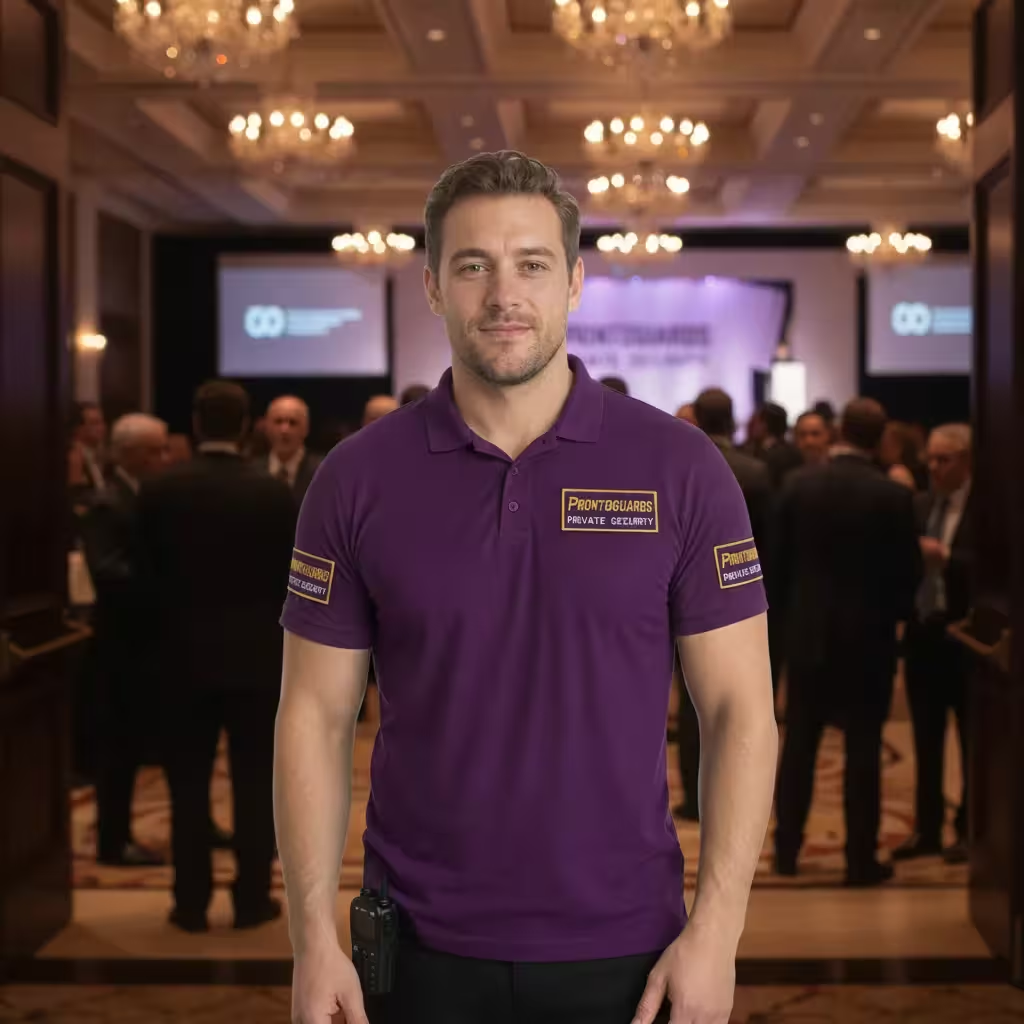
What fire watch security costs (shown upfront)

Fire watch is priced per officer, per hour, with a four-hour minimum — and because it’s usually urgent, we show the price online instead of making you wait on a quote while you’re out of compliance.

Officer / coverage typeRate (per hour)Best for
Unarmed fire watch officer$40–$60/hrThe standard for most fire watch — patrols, hazard monitoring, timestamped logs, and emergency-response readiness while a system is impaired.
Extended / multi-day watch$40–$60/hrCoverage by the shift for as long as the impairment lasts — common for sprinkler outages and construction impairments that run days, not hours.
Same-day / short-notice+10% surchargeRapid deployment when a system has just gone offline and the AHJ clock is already running. Shown before you pay.

Real examples

Short-notice bookings (within 24 hours) carry a 10% surcharge, shown before you pay. Multi-day impairments are priced per shift, with transparent per-officer pricing throughout.

How we scope fire watch (an operator’s view)

A compliant fire watch is scoped to the impairment, the occupancy, and the AHJ’s requirements. Here is how an operations team sets it up:

  1. Confirm the trigger and notify the AHJ

    First, establish what’s impaired and for how long — the 4-hour alarm and 10-hour sprinkler thresholds determine whether a watch is required. The authority having jurisdiction is notified; we coordinate documentation from the first round.

  2. Set the patrol interval to the occupancy

    Patrol frequency follows the risk: 15-minute rounds for high-life-safety settings like healthcare, 15- to 30-minute rounds for most others. The officer walks all affected and adjacent areas on a systematic route, not a single room.

  3. Cover adjacent areas and hot-work zones

    For hot work, the watch covers adjacent spaces — including the floors above and below where sparks travel — and continues for the required period after work stops. Confining the watch to the work room is a common, citable failure.

  4. Document every round to inspection standard

    Each patrol is logged with a timestamp, the areas covered, and any hazard found. The log is the first thing a fire marshal asks for; we keep it to NFPA-style standards so it actually holds up.

What goes wrong on a fire watch (and how it’s prevented)

Officer assigned other duties

The single most common failure: the person ‘on fire watch’ is also running tools, answering phones, or covering another post. NFPA requires the watch be the officer’s sole duty. Our fire watch officers hold no concurrent assignments.

Watch terminated too early

After hot work, the watch must continue for a set period once work stops — ending when the crew packs up is not compliant. We hold the watch for the full required duration.

Adjacent areas not patrolled

Sparks and heat travel through wall cavities and to the floors above and below. A watch confined to the work area misses where fires actually start. Our patrol routes cover adjacent spaces by design.

Inadequate or missing log

An incomplete log fails inspection and weakens any insurance claim. Timestamped, area-specific documentation of every round is standard on every Pronto fire watch.

Compliant fire watch vs. the shortcuts

When a system goes down, owners are tempted to improvise. Here is an honest comparison of a trained fire watch against the shortcuts that fail inspection:

OptionWhat you getCompliance reality
Trained fire watch officerDedicated officer, correct patrol interval, adjacent-area coverage, timestamped logs, emergency readiness.Satisfies the AHJ requirement and stands up to inspection and insurance review.
Untrained guard or workerA warm body in the building with no fire-watch briefing, often juggling other duties.A common compliance failure — an untrained, multi-tasking person does not satisfy the requirement.
No watch / hope it’s fineNothing — the impairment is left uncovered.Out of compliance the moment the threshold passes; risks shutdown orders, fines, and denied claims.

How to hire fire watch security: what to look for (and avoid)

Fire watch is urgent, which is exactly when corners get cut. Here is what actually matters when you hire:

  1. Verify the BSIS PPO license

    A legitimate provider holds a Private Patrol Operator license and deploys Guard-Card officers. Ask for the PPO number and verify it before anyone sets foot on site.

  2. Confirm fire-watch-specific training

    A general guard isn’t automatically a fire watch officer. Confirm the officer is briefed on fire watch duties, the affected areas, and emergency procedures, and carries a communication device.

  3. Demand timestamped, inspection-ready logs

    Ask exactly how rounds are documented. The log is what the fire marshal inspects; vague or after-the-fact logs are a red flag.

  4. Check deployment speed honestly

    When you’re out of compliance, a provider who needs a day to quote and dispatch is the wrong choice. Confirm same-day capability in writing.

  5. Confirm insurance

    Fire watch covers high-stakes situations. Confirm the provider carries substantial per-occurrence liability insurance before you book.

When you need fire watch coverage

Alarm or sprinkler system down

When a required fire alarm is out more than 4 hours, or a sprinkler system more than 10 hours, in a 24-hour period, the fire code requires the building be evacuated or an approved fire watch provided. We deploy same-day to keep you compliant.

Hot work — welding, cutting, grinding

Hot work requires a fire watch during the work and continuing for a set period after it ends, covering adjacent areas including the floors above and below where sparks can travel.

Construction & renovation

Active job sites under NFPA 241 need fire watch when systems are impaired or hot work is underway. We coordinate with your site and the AHJ.

System testing, maintenance, or impairment

Planned impairments — inspections, repairs, upgrades — trigger the same coverage requirement. We schedule officers around your maintenance window.

A licensed California security company — accountable

  • Licensed California security operator (BSIS PPO)
  • Every officer holds a current BSIS Guard Card
  • Founded 2019 · 600+ bookings · 435+ events covered
  • Transparent online pricing — booked in about 60 seconds
CA BSIS Licensed
Founded2019
CoverageStatewide · 24/7

Book fire watch security in four steps

Choose your guards

Pick unarmed, armed, or off-duty officers and set how many you need.

Set the schedule

Add your date, hours, and any extra days. Watch the per-guard, per-hour price update live.

Add the details

Give us the venue or site address and what the job involves so officers arrive ready.

Book & confirm

Pay securely online and get instant confirmation. We assign and brief your officers.

Book fire watch security in your city

We run dedicated local teams across California. Book in the city where your event or job is:

Fire Watch Security FAQs

When is a fire watch legally required?

Under NFPA 101, a fire watch is required when a fire alarm system is out of service more than 4 hours in a 24-hour period, or a sprinkler system more than 10 hours in a 24-hour period. The authority having jurisdiction (AHJ) must be notified, and the building either evacuated or placed under an approved fire watch. Hot work also triggers a fire watch during and after the work.

How fast can you deploy fire watch officers?

We deploy same-day across our California service area. Because you book online and we show pricing upfront, there’s no quote delay — which matters when you’re already out of compliance and the AHJ clock is running.

Do your fire watch officers keep compliant logs?

Yes. Our officers maintain timestamped patrol logs recording each round, the areas patrolled, and any hazards found — the documentation a fire marshal inspects. A compliant log is one of the most common things providers get wrong; ours are kept to NFPA-style standards.

How often do fire watch officers patrol?

Patrol frequency depends on the occupancy and the AHJ, but compliant fire watch typically runs continuous patrols at 15- to 30-minute intervals — 15 minutes for the highest-risk settings such as healthcare. Officers walk all affected and adjacent areas, not just one room.

Can a regular security guard do fire watch?

Not by default. A fire watch officer must be specifically trained for the role, carry a communication device, hold no other concurrent duties during the watch, and know the affected areas. An untrained guard assigned other tasks does not satisfy the requirement — a common compliance failure.

How much does fire watch security cost?

Fire watch runs roughly $40–$60 per hour per unarmed officer, four-hour minimum — about $600 for a 12-hour overnight. Multi-day impairments are priced per shift; short-notice bookings add 10%, shown before you pay.

How quickly is a fire watch required after a system fails?

The common thresholds are 4 hours for an out-of-service fire alarm and 10 hours for a sprinkler system, within a 24-hour period — after which the AHJ must be notified and a watch provided or the building evacuated. Because the window is short, same-day deployment matters.

Need fire watch security in California?

Book licensed officers online in about 60 seconds — exact price shown before you pay.

Order Guards Now →
Reviewed by the Pronto Guards operations team — licensed California security professionals.
Last updated June 2026 · About Pronto Guards · Serving California since 2019
Licensed CA security Call (747) 327-7380 24/7 dispatch