Licensed officers across California — transparent instant pricing, booked online in about 60 seconds. No contracts, no callbacks.
Licensed & Trained Hospital & Healthcare Security Officers · Serving All of California
Healthcare security is de-escalation work before it is anything else. The people an officer encounters in a hospital are frightened, in pain, intoxicated, or in a behavioral crisis — and the wrong temperament makes every one of those situations worse. Pronto Guards staffs hospitals, emergency departments, clinics, and medical offices with licensed officers trained to calm rather than confront, and to work alongside clinical staff rather than around them. If you are comparing healthcare security companies, ask about de-escalation training before you ask about anything else.
New to booking security online? See exactly how Book-a-Guard works — price and confirm licensed officers in about 60 seconds.
The emergency department sets the tone for everything. It is the highest-risk area in any hospital because it concentrates stress, intoxication, behavioral crisis, and waiting into one room. An officer positioned there is not primarily preventing theft — they are reading the room and intervening early, quietly, and usually with conversation rather than contact.
Staff protection is the second job and it is larger than most facilities plan for. Healthcare workers face some of the highest workplace-violence rates of any industry, and much of that exposure is routine: an agitated family member at a nurses' station, a patient escalating during a procedure, a clinician walking to their car at 2 a.m. Presence in patient areas and escorts at shift change address it directly.
Access control is the third, and it is genuinely complex in a hospital. Visiting hours, patient-floor restrictions, pharmacy and controlled-substance areas, and clinical zones each have different rules and different people who legitimately need through. An officer who does not understand those distinctions either blocks clinical staff or waves through anyone in scrubs.
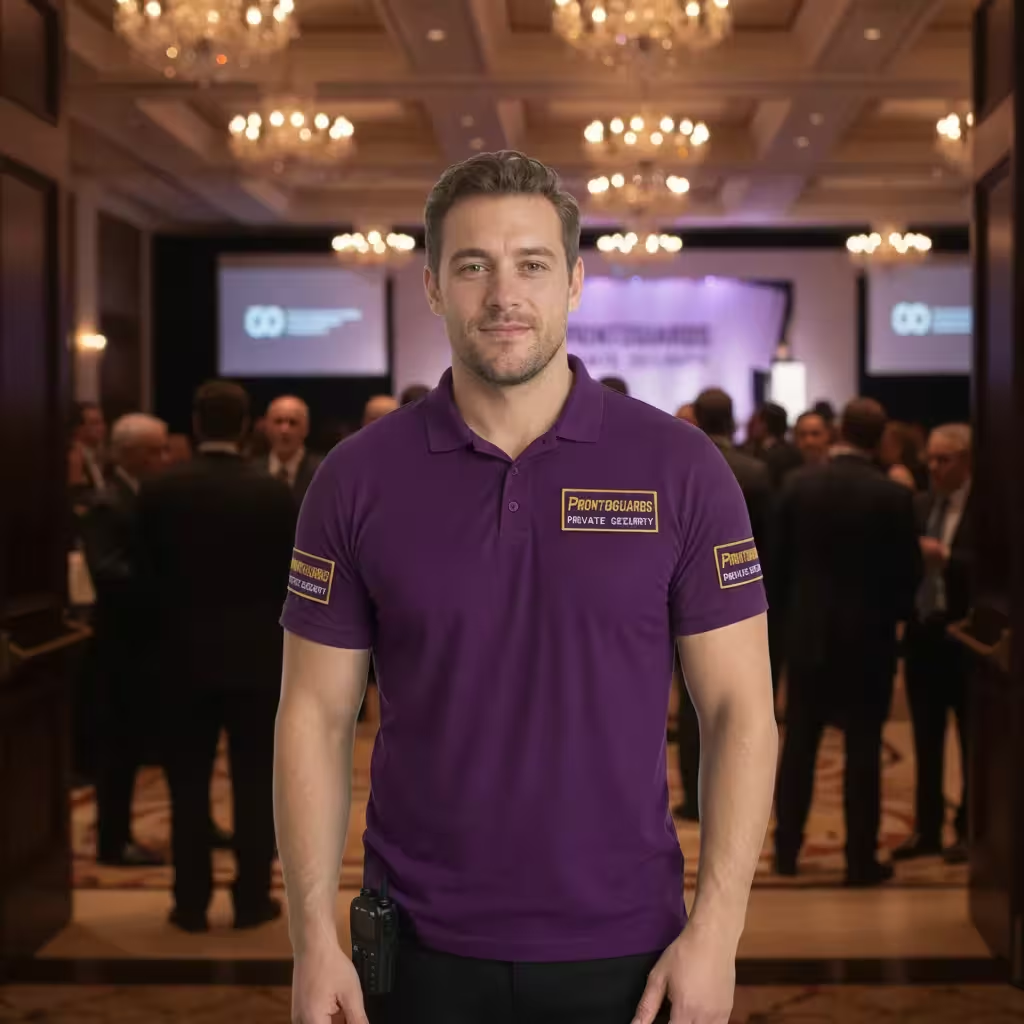
Priced per officer, per hour, four-hour minimum. Hospitals run continuous multi-post coverage scoped by entrance and ER volume; clinics and medical offices typically run a single officer through operating hours.
| Officer / coverage type | Rate (per hour) | Best for |
|---|---|---|
| Unarmed healthcare officer | $45–$65/hr | The standard — de-escalation-trained presence for entrances, waiting areas, patient floors, and staff escorts. |
| ER / behavioral coverage | $55–$75/hr | Officers with de-escalation and behavioral-crisis experience for the emergency department and psychiatric settings. |
| Armed officer | $65–$95/hr | For facilities with a documented armed-incident history or pharmacy and controlled-substance exposure. Most healthcare settings do not use armed coverage, and we will say so. |
Short-notice bookings within 24 hours carry a 10% surcharge, shown before you pay. Continuous 24/7 coverage is quoted at the block rate. You see the full total online before booking — no quote call.
Coverage follows facility type, ER volume, and where staff exposure actually concentrates. The sequence:
A hospital with a busy emergency department is a fundamentally different problem from an outpatient clinic. ER volume, behavioral-health capacity, and whether the facility runs 24/7 determine post count before anything else.
Patient floors, pharmacy, controlled-substance storage, and clinical zones each have their own rules. We write those into post orders with the people who actually enforce them, so the officer neither blocks a clinician nor admits a stranger.
Staff-assault and parking incidents cluster at handover and in the small hours. Officer hours follow that pattern rather than spreading evenly across visiting hours.
Healthcare is the setting where familiarity matters most — an officer who knows the charge nurses, the layout, and the regulars de-escalates faster. A named supervisor owns the account and reviews incidents with facility leadership.
The defining failure in healthcare. An officer who treats an agitated patient like a trespasser escalates a clinical situation into an incident. Our healthcare officers are selected and trained de-escalation-first, and that is the explicit standard for the post.
Security that inserts itself into a medical situation delays treatment and creates liability. Post orders define exactly where the officer's role ends and the clinical team's begins.
Staff assaults and parking incidents concentrate at shift change and overnight. Coverage scoped only to daytime visiting hours misses the actual exposure window.
Who may enter patient floors, pharmacy, and clinical areas varies by facility and by role. Without written post orders an officer either blocks a nurse or admits a stranger in scrubs.
Healthcare facilities generally weigh three approaches. What each actually delivers:
| Option | What you get | Clinical reality |
|---|---|---|
| De-escalation-trained officers | Calm, visible presence trained to defuse before a situation reaches staff, working alongside clinical teams. | The only approach that reduces incidents rather than responding to them. Fits how healthcare actually works. |
| Force-forward security | Physical presence and rapid intervention, trained for confrontation rather than de-escalation. | Escalates behavioral and psychiatric situations that would have resolved. Generates complaints and liability in a patient-care setting. |
| No dedicated security | Clinical staff managing aggressive visitors and behavioral crises themselves, between patient care. | The workplace-violence exposure that makes healthcare one of the highest-risk industries for staff assault. |
Healthcare is the one setting where the wrong officer actively makes things worse. What separates a provider who understands that:
Any company providing guards in California must hold a Private Patrol Operator license and deploy Guard-Card officers. Ask any security firm for its PPO number and verify it. Pronto Guards operates under PPO 122150.
This is the question that matters most in healthcare. An officer whose instinct is control rather than calm turns a distressed patient into an incident, a complaint, and sometimes a lawsuit. Ask what the training actually covers.
A medical environment is unlike retail or events. Officers who understand patient areas, the ER, and how to work alongside clinical staff without interfering are a different skill set entirely.
Healthcare posts filled by rotating subcontractors mean officers who do not know your staff, your layout, or your escalation protocol — in the setting where that knowledge matters most.
$1,000,000 per occurrence is the working standard. A facility with public access and vulnerable patients carries real liability exposure.
The ER is the highest-risk area in any hospital — stress, intoxication, long waits, and behavioral crises converge. Officers hold a calm, visible presence and de-escalate before situations reach staff.
Healthcare workers face some of the highest workplace-violence rates of any industry. Officers provide presence in patient areas and escort staff to parking at shift change.
Managing visiting hours, controlling access to patient floors, pharmacy, and restricted clinical areas, and handling the visitor who will not leave.
A single officer covering entrance, waiting room, and a calm presence — the right scope for outpatient and behavioral health settings.
Pick unarmed, armed, or off-duty officers and set how many you need.
Add your date, hours, and any extra days. Watch the per-guard, per-hour price update live.
Give us the venue or site address and what the job involves so officers arrive ready.
Pay securely online and get instant confirmation. We assign and brief your officers.
We run dedicated local teams across California. Book in the city where your event or job is:
Healthcare security runs roughly $45–$65 per hour for an unarmed de-escalation-trained officer, with ER and behavioral coverage at $55–$75. A medical office covering a 9-hour clinic day is about $450. You see your exact total online before booking.
Yes. The emergency department is the highest-risk area in any hospital, and officers assigned there are de-escalation-trained for intoxication, behavioral crisis, and high-stress family situations. It is a different skill set from retail or event work.
Yes, and it is one of the main reasons facilities book coverage. Healthcare workers face some of the highest workplace-violence rates of any industry. Visible presence in patient areas, response at the nurses' station, and escorts at shift change address the exposure directly.
Yes. Healthcare facilities run around the clock and coverage is scheduled continuously across entrances, the ER, and patient areas. Continuous multi-shift coverage is quoted at the block rate.
Most healthcare settings do not use armed officers, and for good reason — the work is de-escalation in a patient-care environment. Armed coverage is considered for facilities with a documented armed-incident history or significant controlled-substance exposure.
Temperament and training. A hospital officer's core skill is de-escalating someone who is frightened, in pain, intoxicated, or in a behavioral crisis — without escalating and without interfering with clinical care. An officer trained for retail or events brings the wrong instincts to that, and in healthcare the wrong instinct turns a manageable situation into an incident.
Yes, and it is a common scope. An outpatient clinic or medical office typically runs a single officer covering the entrance, waiting room, and a calm presence through operating hours — substantially lighter and less expensive than hospital coverage. Behavioral health settings are scoped with de-escalation-experienced officers specifically.
Book licensed officers online in about 60 seconds — exact price shown before you pay.
Order Guards Now →