Services
Areas
Event Types
How It Works
Book Guards Now → Client Login
Security Guides & FAQs
Pronto Guards
(747) 327-7380
Nightclub & Bar Security Guards Across California
Statewide Service · California

Book Nightclub & Bar Security Guards Online

Licensed officers across California — transparent instant pricing, booked online in about 60 seconds. No contracts, no callbacks.

Licensed & Trained Nightclub & Bar Security Guards Officers · Serving All of California

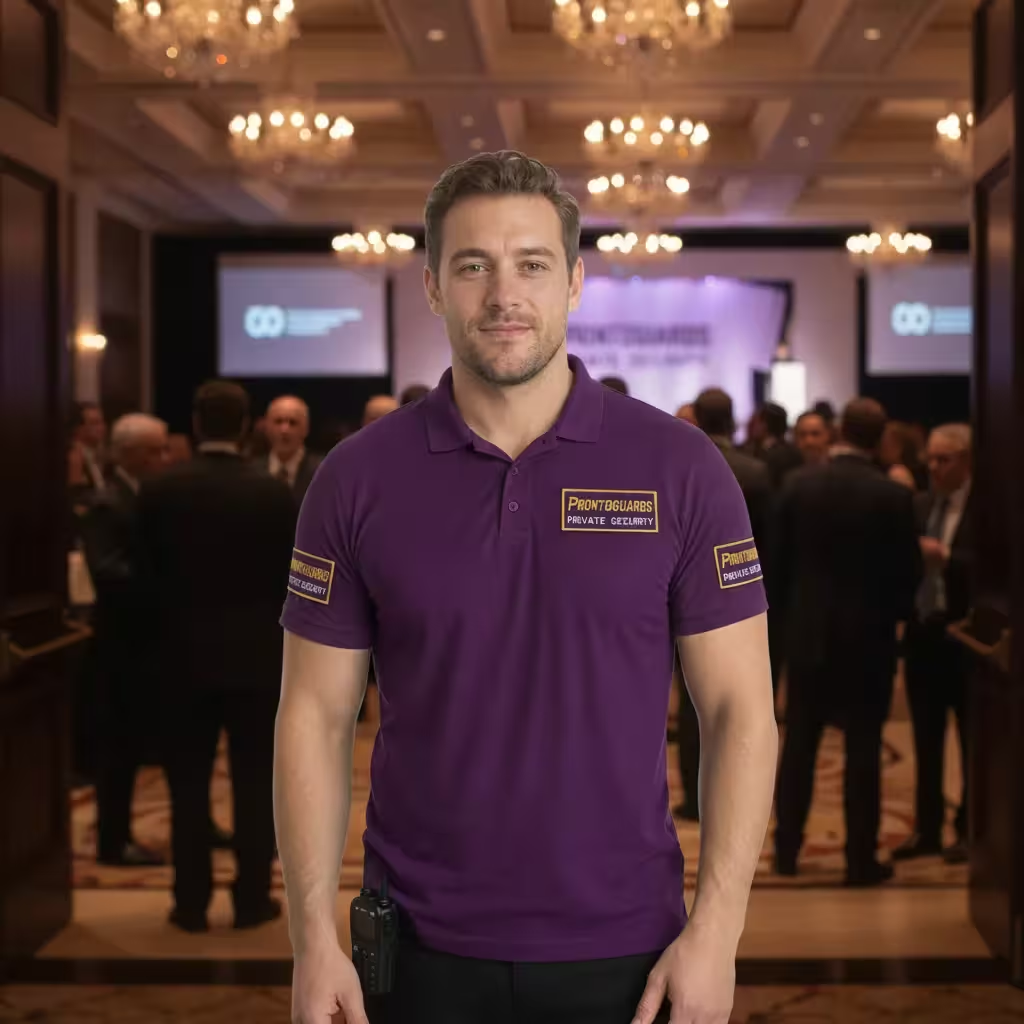
Licensed Nightclub & Bar Security Guards guards on duty in California

Nightclub & bar security across California

In California, anyone working a door as security — a bouncer, a doorman, a floor host with a radio — must hold a BSIS Guard Card and work for a licensed private security company, a rule a great many venues discover only after an incident. Pronto Guards staffs bars, nightclubs, and late-night venues with licensed bouncers and door and floor officers trained in ID verification, capacity control, de-escalation, and documented ejections. The distinction matters most on the night something goes wrong, because that is when your ABC license, your insurer, and possibly a court all ask who that person at the door actually worked for.

600+online bookings
68,000+hours of coverage
435+events covered
24/7dispatch

Nightclub and bar security in California costs $45–$65 per officer per hour with a four-hour minimum. A Friday bar shift with two officers — one on the door, one on the floor — runs about $800 for eight hours; a nightclub at capacity with door, floor, exit, and lot posts runs four officers, about $1,320 for a six-hour peak block. Every officer holds a BSIS Guard Card, works to a written entry standard, keeps the capacity count, and files an incident report the same night. Pronto Guards shows the exact total before you book.

Nightclub security: what it actually involves

The door is the whole night. An officer verifying ID and age, enforcing entry policy consistently, and keeping an accurate capacity count prevents most of what would otherwise happen inside. Consistency is the skill — a policy applied to some patrons and not others creates the disputes it was meant to prevent.

The floor is early intervention. A trained officer reads a room and moves on a situation while it is still a conversation — an over-served patron cut off quietly, two groups separated before either commits publicly. The dramatic intervention people picture is a sign the earlier work was missed.

Close and the lot are the real exposure window. Ejections, last call, and a parking area full of people who have been drinking produce a disproportionate share of venue incidents — and it is the part most venues under-staff, because the room is empty and the night feels over.

What nightclub security costs (shown upfront)

Priced per officer, per hour, four-hour minimum. Most venues book a Friday and Saturday block covering door and floor from opening through close, with additional officers scoped to capacity rather than sold as a package.

Officer / coverage typeRate (per hour)Best for
Unarmed door or floor officer$45–$65/hrThe standard for licensed venues — ID and age verification, entry policy, capacity counts, floor watch, and de-escalation.
Armed officer$65–$90/hrFor venues with significant cash handling, late-night lot exposure, or a documented armed-incident history. Most bars and clubs do not need it, and we will say so.
Lot and perimeter coverage$45–$65/hrOfficers covering the parking area and exterior queue through close — where a disproportionate share of venue incidents actually happen.

Real examples

Short-notice bookings within 24 hours carry a 10% surcharge, shown before you pay. Recurring weekend coverage is quoted at the block rate. You see the full total online before booking — no quote call.

How we scope venue coverage (an operator’s view)

Officer count follows capacity, layout, and the hours where incidents concentrate. The sequence:

  1. Start from licensed occupancy

    Coverage scales with the room. A general working figure is roughly one officer per 75 to 100 patrons at capacity, adjusted up for alcohol-forward or late-night formats and down for seated or early venues.

  2. Map the fixed posts

    Door, floor, and exit are separate jobs. An officer running ID cannot also be watching the back of the room, and a venue told two officers can do all three is being sold a number rather than a plan.

  3. Cover close and the lot

    Coverage that ends at last call misses the window where most incidents occur. We scope through close and into the lot clearing, because that is when people are outside, tired, and least patient.

  4. Assign a lead and set escalation

    One officer holds the lead role and owns the call on ejections and law-enforcement contact. Management knows who that is before doors open, so nobody is negotiating authority at 1 a.m.

How many security officers does a bar or nightclub need?

VenueOfficersWhere they stand
Under 100 occupancy · neighborhood bar1 (four-hour minimum)The door: ID, entry policy, capacity count. Bar staff hold the floor with the officer as backup.
100–200 · bar or lounge with a dance floor2Door and floor as separate posts; the floor officer covers last call and the lot at close.
200–400 · nightclub, live-music room3–4Door, floor, exit, and a lot post through close. One officer is the named lead.
400–800 · multi-room club, patio or rooftop5–7Two door lanes, two floor, one on the patio or VIP, one at the exit, one in the lot; a lead running the radio.
800+ · large-format venue or ticketed night8+, one supervisor per 8–10A dedicated ID lane, roving pairs, fixed posts on every exit, and a supervisor coordinating with management and the promoter.

Why the door officer cannot also work the floor

The single most common way a venue ends up with a problem is one officer doing two jobs. The person checking ID and holding the capacity count cannot see the back of the room, and the moment a situation starts inside, the door is unwatched and the count stops. Two officers at a 150-person bar is not an upsell; it is the minimum number of eyes the room actually has. Above that, every added post covers a specific exposure: the exit at close, the patio where smokers and drinks mix, the lot where the night actually ends.

The working ratio is roughly one officer per 75–100 patrons at capacity, adjusted for the layout and the crowd. Book-a-Guard asks for your occupancy and your layout and shows the count and the total before you commit.

What changes by venue type

VenueWhat changesDeployment
Neighborhood barRegulars, one entrance, a small lot; the risk is over-service and the occasional disputeOne door officer who also reads the room; lot walk at close.
Dance clubLines, fake IDs, a dark room, capacity pressureA door lane with a dedicated ID check, a floor pair, an exit post, and a lot post through close.
Live-music venueTicketed entry, a stage front, load-in and load-outTicket and bag check at the door, a barricade or stage-front post, backstage access control.
Rooftop or patioAn open perimeter, drinks moving between spaces, fall and egress concernsA patio post that manages flow between spaces and keeps the perimeter clear.
Lounge with bottle serviceVIP sections, high-value tabs, guests who expect discretionPlainclothes VIP coverage, a door officer managing the list, and cash-handling awareness.
Sports bar on game nightA surge crowd, rivalries, a hard closeDoor and floor posts sized to the surge; officers repositioned to the exit and lot before the final whistle.

What goes wrong at venues (and how it is prevented)

Unlicensed staff working security

The most consequential failure, and the most common. If the person at your door lacks a Guard Card, the venue carries the exposure for anything they do. Every Pronto Guards officer is BSIS-licensed and works under PPO 122150.

Inconsistent door policy

Entry rules applied unevenly generate confrontation and discrimination complaints. Officers work to a written entry standard agreed with the venue, so the answer is the same for everyone.

Capacity drift

Nobody counts, the room fills past its occupancy limit, and the venue is exposed to fire-code enforcement. An officer maintains an accurate count and holds the line at the door.

Nothing written down

An ejection nobody documented becomes the patron's version by default. Officers produce written incident reports the same night, which is the venue's record if a complaint or claim follows.

A licensed officer vs. an unlicensed door person

Most venues are choosing between two models, and the difference is invisible on a quiet night and decisive on a bad one:

OptionWhat you getLiability reality
Licensed BSIS security officerGuard-Card certified, trained in de-escalation and use-of-force limits, working under a licensed PPO with written incident reports.The company's insurance responds and the venue is on defensible ground with ABC and its own carrier.
Unlicensed bouncer or door personPhysical presence and, sometimes, real experience — but no certification, no training standard, and no licensed employer behind them.The venue absorbs the exposure. Illegal under California licensing rules for security work, and insurers routinely decline claims arising from it.
No dedicated door coverageBar staff managing entry between serving drinks. Nobody counting capacity or verifying ID consistently.Fake IDs get through, capacity gets exceeded, and both are enforcement matters against your license rather than someone else's.

How to hire nightclub security: what to look for (and avoid)

Venue security is the corner of this industry where unlicensed work is most common, and where it costs the operator most. These are the questions worth asking before anyone works your door:

  1. Verify Guard Cards and the PPO license

    Every officer working security at a California venue must hold a valid BSIS Guard Card, and the company must hold a Private Patrol Operator license. Ask any security firm for its PPO number and verify it. Pronto Guards operates under PPO 122150. You can verify any California PPO license yourself on the state’s DCA license search or via the Bureau of Security and Investigative Services.

  2. Understand what an unlicensed door person exposes you to

    Hiring a large friend or an off-the-books bouncer is common and puts the liability squarely on the venue. If that person injures a patron, your insurer may decline and your ABC license becomes part of the conversation.

  3. Ask about de-escalation training specifically

    The measure of a door officer is how many situations end without contact. Ask how officers are trained to handle an over-served patron, a refused entry, and a dispute between groups — not how they handle a fight.

  4. Ask W-2 or subcontractor

    Venue posts are frequently subcontracted to whoever is free that weekend, which means a different stranger at your door each night and insurance that may not follow them. Ask directly.

  5. Confirm incidents get documented

    Every ejection and refused entry should produce a written record. When a complaint or a claim arrives weeks later, that documentation is the venue's protection.

Ten questions to ask any nightclub or bar security company

AskThe answer you want
Does every officer hold a current BSIS Guard Card?Yes, and the company holds a Private Patrol Operator license you can verify.
Are the officers your employees or subcontractors?Employees. The same officers hold your posts week to week, not whoever is free.
Do you work to a written entry standard?Yes — agreed with you before the first night, applied the same way to everyone.
How are officers trained in de-escalation?Specifically, and measured by how many situations end without contact.
How is the capacity count kept?By the door officer, continuously, with re-entries tracked; the number is available to the manager at any time.
Do you cover the lot through close?Yes; coverage is scoped past last call because that is when incidents happen.
Do you file incident reports?Every ejection and refusal, in writing, the same night.
What happens if police are called?The lead makes the call, meets them at the door, and hands over the written account.
Who is my point of contact during the night?The lead officer, on a radio and a number the manager has before doors.
What will it cost, exactly?A per-officer rate and a total you see before you book.

The night, hour by hour: what goes wrong and who covers it

A venue night has a shape, and the incidents cluster in predictable windows. Here is where problems actually happen and which post is watching.

PhaseWhat goes wrongWho covers it
Pre-open walk-throughPropped back doors, a blocked exit, last night’s issue not passed onThe lead walks the venue with the manager, confirms exits and the entry standard, tests radios.
Doors openLine management, fake and borrowed IDs, entry-policy argumentsThe door officer runs ID and the count to a written standard; a second officer manages the line at volume.
First two hoursCapacity creeping past the count as re-entries and side doors go unwatchedThe count is kept at the door; the floor officer sweeps side doors and the patio.
PeakOver-served patrons, disputes between groups, drinks in the wrong placesFloor officers intervene while it is still a conversation; the lead makes the call on ejections.
Last callThe rush to the bar, the first ejections, the patio fillingThe floor officer moves to the bar area; the exit officer takes position.
CloseEveryone leaving at once, refusals to leave, arguments continuing outsideOfficers clear the floor in sections and hold the exit; the lot officer is already outside.
Lot clearingThe riskiest thirty minutes: fights that started inside, impaired drivers, rideshare pile-upsThe lot post and the lead stay until the lot is empty; police called early if a situation is escalating.
Incident reportsAn ejection nobody documented becomes the patron’s version by defaultEvery ejection and refusal is written up the same night and handed to management.

What your ABC license, the fire marshal, and your insurer expect (and what the officers do about it)

A licensed venue answers to more than its patrons. These are the requirements that most often decide whether an incident becomes a claim, a citation, or a license condition, and how the officers on your door keep you on the right side of each. California ABC’s Responsible Beverage Service program sets the standard for the serving side; the officers cover the door and the floor.

RequirementWho enforces itWhat the officers do
No service to minors or obviously intoxicated patronsABC; the venue’s license conditionsID verification at the door to a written standard; over-served patrons identified and cut off early with the bar staff.
Occupancy limitFire marshal; city code enforcementA continuous capacity count at the door, re-entries tracked, the number available to management on request.
License conditions on hours, security, and noiseABC; the city’s conditional use permitPost orders written to the venue’s actual conditions: closing time, lot coverage, patio hours.
Licensed security onlyBSIS; the venue’s liability carrierEvery officer carries a Guard Card; the company holds the PPO license and $1M per occurrence.
Incident documentationInsurers, ABC investigators, and courtsWritten reports for every ejection and refusal, filed the same night, retained for the venue.
Use-of-force limitsBSIS training standards; the courtsDe-escalation first; physical intervention only within the trained limits, and always documented.

Where venue security actually gets tested

Door, ID & capacity control

Officers run the door — ID and age checks, dress and entry policy, and capacity counts that keep the venue legal and safe.

Floor & crowd management

Crowd-trained officers work the floor, watch for over-served patrons and conflict, and keep the energy up without letting it tip over.

Conflict & ejection handling

Officers de-escalate disputes and handle ejections firmly and safely — the core skill that protects patrons, staff, and your license.

Close & parking-lot coverage

The highest-risk window is closing time and the lot. Officers manage the close, clear the floor, and keep the parking area orderly.

A licensed California security company — accountable

  • Licensed California security operator (BSIS PPO)
  • Every officer holds a current BSIS Guard Card
  • Founded 2019 · 600+ bookings · 435+ events covered
  • Transparent online pricing — booked in about 60 seconds
CA BSIS Licensed
Founded2019
CoverageStatewide · 24/7

Book nightclub security security in four steps

Choose your guards

Pick unarmed, armed, or off-duty officers and set how many you need.

Set the schedule

Add your date, hours, and any extra days. Watch the per-guard, per-hour price update live.

Add the details

Give us the venue or site address and what the job involves so officers arrive ready.

Book & confirm

Pay securely online and get instant confirmation. We assign and brief your officers.

Book nightclub security security in your city

We run dedicated local teams across California. Book in the city where your event or job is:

Nightclub & Bar Security Guards FAQs

How much does nightclub security cost?

Priced per officer, per hour, 4-hour minimum, about $40–$120/hr depending on guard type and shift. Late-night and high-capacity venues are scoped with added door and close coverage. Exact total online.

Can officers run the door at my California bar?

Yes — ID and age verification, dress and entry policy, and capacity counts are core door work that keeps the venue legal and safe.

How do officers handle ejections and conflict?

Calmly and firmly. De-escalation is the first tool; ejections are handled safely when needed. Protecting patrons, staff, and your license is the whole point.

Do you cover closing time and the parking lot?

Yes — closing time and the lot are the highest-risk window, and they get weighted coverage to clear the floor and keep the parking area orderly.

Are your officers licensed and insured?

Yes — BSIS PPO licensed, current Guard Cards, $1,000,000 insured.

Does my ABC license require security?

Many licenses carry conditions that require security on specified nights, at specified hours, or above a certain occupancy, and city conditional use permits often add more. Check the conditions page of your license and your CUP. Pronto Guards writes post orders to match them and provides the PPO number and certificate of insurance the city or ABC may ask for.

Can your officers refuse entry, and on what basis?

Yes. Officers refuse entry under a written entry standard agreed with you in advance: invalid or borrowed ID, visible intoxication, dress and item policy, capacity. Applying the same standard to everyone is what keeps refusals defensible and keeps discrimination complaints off your desk.

What happens when the police are called?

The lead officer makes the call early when a situation is escalating, meets responding officers at the door, and hands over a written account of what happened. Cooperative, documented handling is what protects the venue when the incident is reviewed later.

Do you provide incident reports?

Every ejection, refusal, medical call, and police contact produces a written report the same night, delivered to management. When a complaint or a claim arrives weeks later, that record is the venue’s version of events.

Do you provide bouncers?

Yes — licensed ones. In California a bouncer who checks IDs, refuses entry, or removes a guest is doing security work and must hold a BSIS Guard Card and work for a licensed private security company; an unlicensed bouncer puts the venue’s ABC license and insurance at risk the first time an ejection goes wrong. Pronto Guards’ door officers are licensed bouncers by that definition: they card every guest, count the room, handle refusals without escalation, and write the incident report the same night. Booked online with the price shown upfront.
Need nightclub security security in California?

Book licensed officers online in about 60 seconds — exact price shown before you pay.

Order Guards Now →
Licensed CA security Call (747) 327-7380 24/7 dispatch