Licensed officers across California — transparent instant pricing, booked online in about 60 seconds. No contracts, no callbacks.
Licensed & Trained Office Building & Corporate Security Companies California Officers · Serving All of California
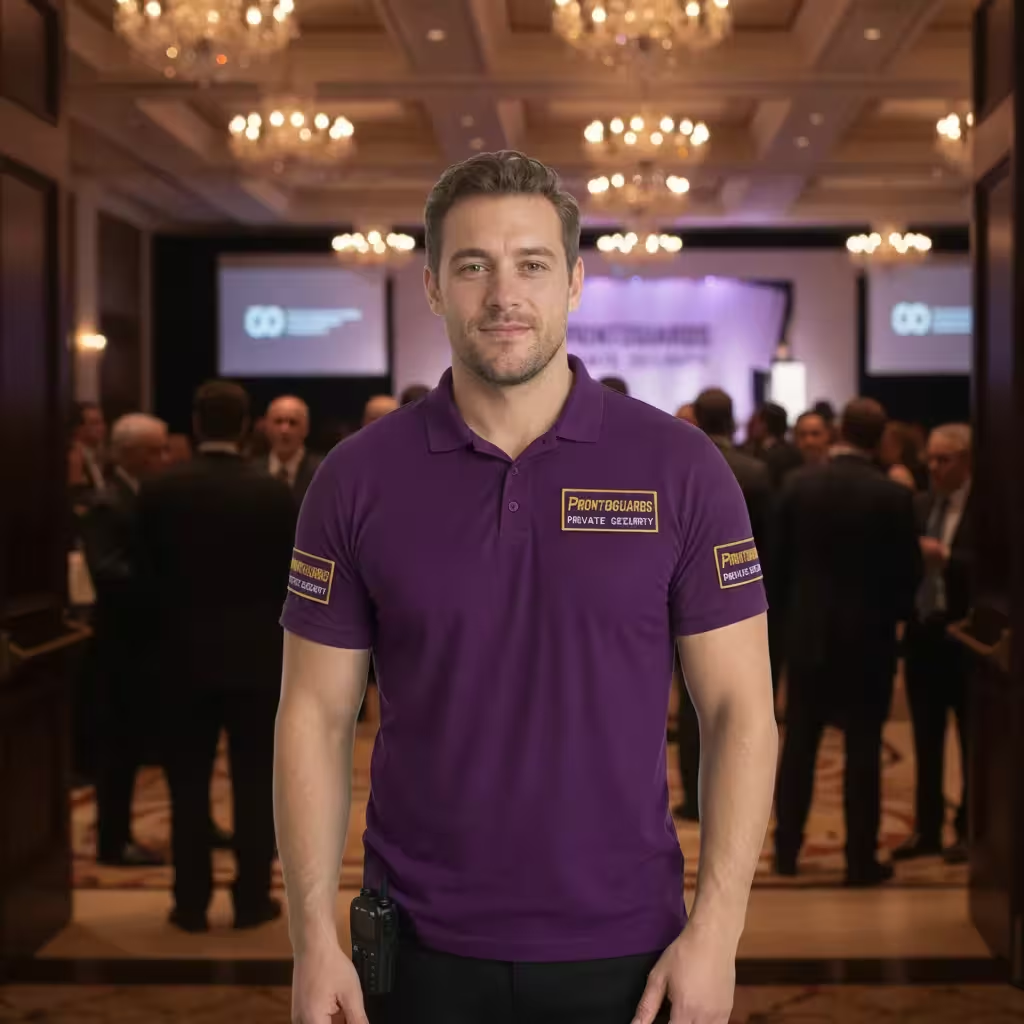
Office security is a front-of-house job before it is a protection job. The officer in your lobby is the first person every employee, client, and delivery driver meets, and they are simultaneously your access control, your visitor log, and your incident response. Pronto Guards is a licensed California security company staffing office buildings, business parks, and corporate campuses with officers who can hold a professional front desk and still handle a real incident. If you are comparing corporate security companies, the useful question is whether their officers are trained for the reception half of the role at all.
New to booking security online? See exactly how Book-a-Guard works — price and confirm licensed officers in about 60 seconds.
The lobby is the whole control problem. Every genuine access risk in an office building resolves to one question: did an unauthorized person get past the front desk? Tailgating behind a badged employee, a delivery driver waved through, a former employee who still looks familiar — none of those are stopped by hardware, and all of them are stopped by an officer who is actually watching.
The second job is presence in a professional register. A corporate officer spends most of their day greeting people, directing visitors, and answering questions, and the tone they set is the tone of your building. Officers who cannot do that half of the role well create friction with tenants that eventually costs the contract regardless of their security competence.
The third job is the empty building. Once tenants leave, exposure shifts to stairwells, parking structures, mechanical spaces, and the loading area. Documented after-hours rounds with timestamped checkpoints cover that window and give building management something concrete when a tenant asks what happens overnight.
Priced per officer, per hour, four-hour minimum. Most buildings run a single lobby post through business hours, with after-hours or weekend coverage scoped separately rather than sold as one flat contract.
| Officer / coverage type | Rate (per hour) | Best for |
|---|---|---|
| Unarmed lobby / front-desk officer | $40–$60/hr | The standard corporate post — reception, visitor badging, access control, and incident response during business hours. |
| Armed officer | $60–$90/hr | For buildings with cash handling, high-risk tenants, or a documented threat history. Most office environments do not need it, and we will say so. |
| After-hours patrol coverage | $45–$70/hr | Documented rounds of floors, stairwells, parking structures, and the perimeter once the building empties. |
Short-notice bookings within 24 hours carry a 10% surcharge, shown before you pay. Recurring weekday or multi-shift coverage is quoted at the block rate. You see the full total online before booking — no quote call.
Coverage follows the entrances, the tenant mix, and the hours the building is genuinely exposed. The sequence:
First we establish the entrances, the loading dock, the parking-structure connections, and any door that gets propped. A building with one staffed lobby and three unwatched side entrances is not access-controlled, and the post count follows from that rather than from floor count.
Before the first shift we settle exactly how visitors are badged, how contractors are escorted, and what happens when someone arrives without an appointment. Written into post orders so it does not drift with personnel.
These are different jobs. The lobby post is reception and access control; the after-hours post is patrol and alarm response. Scoping them as one contract usually produces a compromise that serves neither.
The same officers hold your lobby wherever scheduling allows, because an officer who knows the tenants recognises the person who does not belong. A named supervisor owns the account and reviews logs with building management.
The commonest real breach and the one badge systems cannot solve. Post orders specify that the officer verifies each unbadged person individually rather than assuming anyone walking with an employee belongs.
An officer seated behind a desk for nine hours stops observing and starts processing. Post orders build in floor rounds and repositioning so the role stays active.
Rules applied strictly to some visitors and loosely to others generate complaints and create the exception that gets exploited. The access standard is written and applied identically across every shift.
Buildings are frequently staffed 9 to 5 and unwatched from 6 p.m., which inverts the actual risk window. We scope after-hours coverage from the building's real exposure rather than its occupancy hours.
Building managers generally weigh three approaches to access and safety. What each actually delivers:
| Option | What you get | Access reality |
|---|---|---|
| Staffed lobby officer | A person verifying every visitor, badging contractors, holding the access policy, and responding first to any incident in the building. | The only option that handles the visitor who talks their way past a badge reader — which is how most unauthorized access actually happens. |
| After-hours patrol only | Documented rounds of floors, stairwells, and parking once the building empties. | Strong value where the building is genuinely secure during the day. Does nothing about daytime tailgating or visitor control. |
| Badge readers and cameras alone | An audit trail and a recording. Both genuinely useful and both entirely passive. | A badge system cannot stop tailgating, and a camera cannot ask someone who they are here to see. Effective alongside a staffed lobby, not instead of one. |
Corporate security is bought on a rate card more often than any other category, which is exactly why the results vary so much. What actually matters:
Any company providing guards in California must hold a Private Patrol Operator license and deploy Guard-Card officers. Ask any security firm for its PPO number and verify it before signing. Pronto Guards operates under PPO 122150.
Your lobby officer is a customer-facing role whether the contract says so or not. An officer with no front-desk instinct becomes the reason clients form a poor first impression of your building.
Corporate posts are commonly filled by security contractors rotating whoever is available, which means your tenants meet a different stranger every week and nobody learns the building or its people.
Visitor logs, incident reports, and after-hours round records only have value if someone reads them. Ask who reviews them with you and how often.
$1,000,000 per occurrence is the working standard. A building with public access carries real liability exposure and a provider who cannot produce a certificate is not one to put at your front door.
Officers manage reception, greet and badge visitors, log arrivals, and control who moves past the lobby — the single control point that determines who is in your building.
Verifying credentials, issuing visitor passes, escorting contractors, and enforcing the tenant access policy consistently across every shift.
Buildings are most exposed when they are empty. Officers cover the overnight and weekend windows, check secured floors, and respond to alarms.
Officers escort staff to parking after dark, manage a distressed visitor or a terminated employee, and are the first response to a medical incident on site.
Pick unarmed, armed, or off-duty officers and set how many you need.
Add your date, hours, and any extra days. Watch the per-guard, per-hour price update live.
Give us the venue or site address and what the job involves so officers arrive ready.
Pay securely online and get instant confirmation. We assign and brief your officers.
We run dedicated local teams across California. Book in the city where your event or job is:
Roughly $40–$60 per hour for an unarmed lobby officer, four-hour minimum. A single-tenant office covering a 9-hour business day runs about $432. After-hours patrol coverage is scoped separately. You see your exact total online before booking.
Most do not. Office environments are well served by unarmed officers, because the work is access control, visitor management, and presence rather than confrontation. Armed coverage makes sense for buildings with cash handling, high-risk tenants, or a documented threat history.
Yes, and in most office buildings that is exactly the role. The officer greets and badges visitors, manages deliveries, and holds the access policy. It is worth confirming your provider trains for that customer-facing half of the job rather than treating it as an afterthought.
Different buyer and different job. Ongoing office coverage is a standing post — lobby, access control, after-hours patrol — contracted continuously. Corporate event security covers a specific occasion: a conference, product launch, or company function with a defined start and end.
Yes. Many buildings are genuinely secure during business hours and exposed once tenants leave. After-hours patrol with documented rounds of floors, stairwells, and parking is a common and cost-effective scope.
That is the specific thing an officer solves and hardware cannot. A badge reader authenticates a credential; it cannot tell whether two people walked through on one badge. An officer at the lobby verifies each unbadged person individually. It is worth writing that expectation into post orders explicitly, because an officer who has not been told to challenge tailgaters generally will not.
Same-day and next-day coverage is normal for standard lobby and patrol posts, booked online rather than through a callback. Buildings with unusual access policies or a complex tenant mix benefit from a short scoping conversation first, but you never wait on a quote to see the price.
Book licensed officers online in about 60 seconds — exact price shown before you pay.
Order Guards Now →